

Advent Hymns: Why a Minor Key Belongs in the Most Festive Month
Holiday music is everywhere this time of year, and for good reason: music evokes emotion. Its history predates (dare I say) Mariah Carey, the Carpenters, and even Bing Crosby. And the colors of the sounds of the season are just as varied as your Aunt Barbara’s multi-colored light Christmas tree.
Let’s go back—way back—to the origins of preparing our hearts and minds for the season with sound: Advent.
At the most festive, joyful time of the year, revelers sing O Come, O Come, Emmanuel: a hymn composed in a minor key. A beloved sad, despairing song speaks deeper truth about the December holidays. Why do we celebrate with sadness?
In the Christian faith, Advent takes its name from the Latin adventus, which means “arrival, or coming”. Advent covers the four Sundays before Christmas; this year it begins on Sunday, November 29, 2026.
The music of Advent is distinctive from the music of Christmas morning because it is sung from a time preceding the arrival of the Christ child; the story is unfolding but not yet come to pass. O Come, O Come, Emmanuel is a call, a hopeful prayer waiting for an answer. And the response? Well, it takes us into the complex beauty of this season of peace.

What makes a carol a carol
First, let’s iron out some details. Definitions make or break this conversation.
In my mind, a Christmas song is what theologians would call ‘secular’ music—it is sung by anyone (partaker of the faith or not) about the holiday season. Think: snow, sleigh bells, marshmallows and hot cocoa, a parade of reindeer flickering across the night sky.
Conversely, a Christmas carol carries a tradition and a history inside a sacred perspective and speaks to the birth of Christ.
O Come, O Come, Emmanuel sits squarely in this camp. Call it an Advent hymn or a carol, these lyrics are a prayer set to music.
Historically, the word ‘carol’ began on its feet… as a dance.
In Old French, a carole was a round dance accompanied by singers. When English borrowed the word around 1300, it could mean a joyful song or a dance in a ring. The sense of a Christmas ‘hymn of joy’ eventually turns up around 1500. (It’s interesting how carols were dancing in celebration long before they were kneeling in petition and reverence.)
Why does festive music reach for a minor key?
The question underneath “why does this hymn sound so sad?” is a bigger one: why do minor keys live inside festive seasons at all?
To me, the reason is simple: the holiday season holds more than one feeling. December brings the parties and the responsibilities, the merriment and the missing, the joy and the anticipation (often all within the span of twenty minutes).
Life is filled with a complexity of emotions, and music shows the range of those colors. The holidays are simply a time when we let ourselves hear, reminisce, and embrace the whole palette.
To ears raised on Western music, a minor key tends to read as sadness or longing: the weight of heaviness, or a question left unanswered. Granted, how much of this deeper feeling or knowing is built into us vs. how much we’ve learned from a lifetime of hymnals and film scores is still hotly debated.
What isn’t in question is what the words of this hymn are doing to our emotional landscape.
O Come, O Come, Emmanuel: a carol about waiting
Lyrics color music. Consider the first verse, and you might actually hear the pleading:
O come, O come, Emmanuel, and ransom captive Israel, that mourns in lonely exile here until the Son of God appear.
Emmanuel means “God with us”; the whole hymn is a call for the divine presence to arrive. The lyrics are a request, a longing, a journey: the need for a hero. The lyrics, quite literally, beg for a savior to come.
And this isn’t the first time we hear of a call for a savior in religious sentiments.
In fact, the verses grew from the “O Antiphons,” the short Latin chants that probably date to the eighth century which were sung at evening prayer on the seven nights before Christmas Eve.
Each antiphon calls the coming Messiah by a different name: Wisdom, Adonai, Root of Jesse, Key of David, Dayspring, King of Nations, Emmanuel.

The Latin hymn was in print by 1710 (one hymn historian traces it to 1693), and John Mason Neale translated it into English in 1851. His first line was Draw nigh, draw nigh, Emmanuel; the words most of us sing come from an 1861 revision.
Music expands lyrics. The musical tune has its own story.
Thomas Helmore published it in the 1850s and credited “a French Missal in the National Library, Lisbon.” Nobody could find that missal, and some suspected Helmore had simply written the melody himself. (More than a century of waiting, for a hymn about waiting. Ironic.)
In 1966 the musicologist Mary Berry found the music in Paris, in a 15th-century processional that had belonged to French Franciscan nuns. There, the melody carried verses added to the Libera me, a chant sung at funerals.
The oldest known home of this song of longing is a rite for the dead.
Strictly speaking, the melody is older than the major-and-minor system we learn as children; it comes from the world of chant modes. Hymnals usually print this tune in E minor, which is how most of us hear it.
Interestingly, in many modern settings, the hymn carries a surprising openness. The melody breathes, the longing reaches upward, and then the refrain answers its own verses: Rejoice! Rejoice! Emmanuel shall come to thee. The rejoicing comes before the arrival, in the future tense.
That’s why it’s one of my favorite carols.
When I arranged it for my album “Christmas Time Is Here,” I set it in D minor for piano, full orchestra and a men’s choir singing in Latin.
What I love most is the open fifths. A fifth with no third inside it is neither major nor minor; it sounds like an open drone, much like the tanpura drone in Indian classical music, which sounds the root note and its related fifth. The perfect fifth sits hollow and unresolved, and that’s what makes the melody so haunting.
I like that dark color in the season of light. As the days continue to grow darker, the musical darkness seems to be a welcome repose for the light as it returns (Winter Solstice/Christmas Day).
And, perhaps even more, I love the unstated idea underneath it all: humbly asking for something while knowing it will arrive… and in some sense, already has.
That’s a beautiful, deep philosophical sentiment to sing in the darkest weeks of the year.
Silent Night: a carol about heavenly peace
Now, set the peaceful beauty of Silent Night beside the petitioning O Come, O Come, Emmanuel.
Silent Night is a lullaby: a peaceful moment where you can relax into the present, because what you asked for is here, now.
In 1816, Joseph Mohr penned the lyrics; Franz Xaver Gruber set the words to music. The carol was first sung on Christmas Eve 1818 at St. Nicholas Church in Oberndorf, Austria.

Gruber’s original music moves in 6/8 with the lilting, dotted rhythm of a siciliana, which Baroque and Classical composers reached for in pastoral scenes; the slower version in 3/4 we sing today leans even further into lullaby.
Schlaf in himmlischer Ruh: “sleep in heavenly peace.”
O Come, O Come, Emmanuel is the call. Silent Night is the answer. Advent lives in the space between them.
Ave Maria: every sonic color in one prayer
Some sacred music simultaneously holds both the call and the response. Ave Maria is a perfect example.
Think of how complex the Ave Maria—any Ave Maria—can be. Rapturous melodies that soar, unexpected harmonic tensions that build and release, a perpetual forward motion.
That complexity of emotions in sound makes complete sense to my mind. The mother of the Christ probably lived all these emotions, every day if she knew who her child was, what he would face and why he would face it.
Awesome joy and debilitating dread shared a single heart. The music in virtually every Ave Maria reflects it.
But really, we all experience music as a complex range of emotions that meet our emotional states as we journey through life. The holidays are just a good time to notice it.
I accidentally wrote an Ave Maria. (Yep. Accidentally.)
Mine began as a melody, floating through my mind, passing through my dreams, and haunting my waking thoughts for days on end until I wrote down the music.
Then, it was just a progression that spoke loudly to my heart. (So loudly, in fact, I actually used this same progression in some of the “No Postage Necessary” film score. Listen closely to the track The Letter.)
It took two years for the actual words to arrive. (Talk about waiting.) I was sitting at my piano one day, and bam: this is an Ave Maria.
I’m not Catholic. I didn’t have a deep connection to these words, but in that moment, I heard them as plain as day.
Sometimes inspiration descends like a graceful dove, and you just know it’s right.
A year later, I recorded my Ave Maria with the Sofia Boys Choir, in sessions between Nashville and Sofia, Bulgaria, for the “Christmas Time Is Here” album.
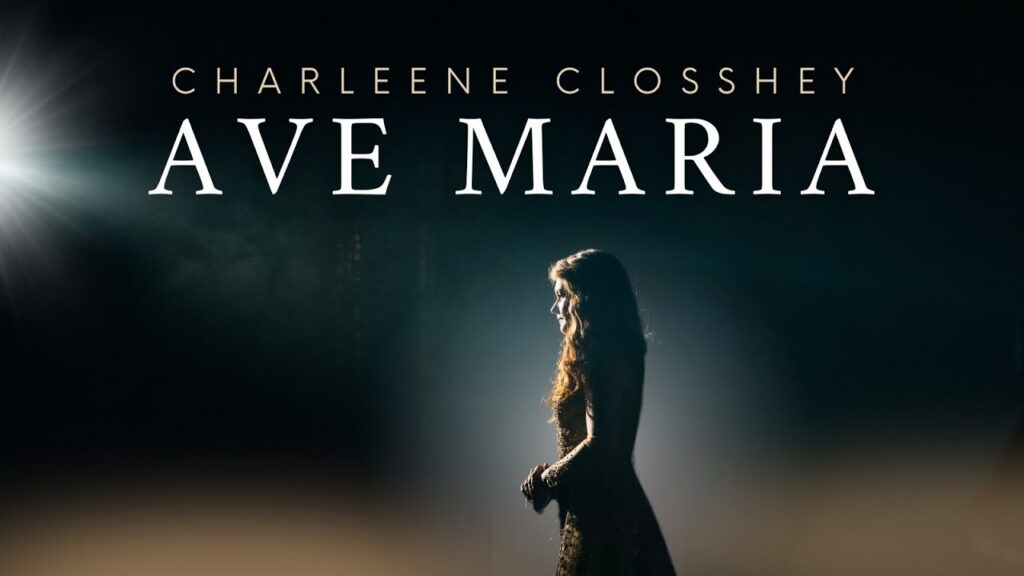
On Christmas Day 2018, it was performed in concert in Sofia by the Sofia Boys Choir and the national Bulgarian orchestra in their national symphony hall. My husband and I were there in person to watch, listen, and witness it. Honestly, this experience changed my life.
We also created a choral arrangement, which won the Master Chorale of Tampa Bay’s Christmas Carol Composition Competition. The 150-voice Chorale premiered it in December 2018, and the performance aired on public radio, on Classical WSMR (WUSF Public Media).
On Christmas morning 2019, I was invited to perform my Ave Maria on the national morning show Fox & Friends.
The divine feminine always shows up when you call her.
A practice for each Sunday of Advent
Getting back to Advent…
December flies. The hustle and bustle, the parties, the responsibilities, the merriment, the sadness, the missing, the longing, the joy, the anticipation: all of it makes December feel like one of the shortest months of the year.
There are much deeper spiritual reasons people keep Advent. For me, it’s a marking of time. A marking of presence.

So, here’s a practice to try on each of the four Sundays leading up to Christmas: November 29, December 6, December 13 and December 20.
Let this small weekly marking become a ritual, and the frame around a sound matters.
Advent listening (3–5 minutes)
- Choose one carol or song. Sacred or secular, familiar or new, either works. (What matters is that you chose it.)
- Turn off the world. Do nothing else. Silence notifications and limit technological distractions. Turn down the kids. Put the dog outside for a minute. (Unless it’s cold. Then don’t do that.)
- Close your eyes… and let the music take over you.
- Notice what emotions arise for you. It could be joy. It could be a longing for someone who’s absent. Nostalgia, excitement, dread, worry, despair. All are valid (and expected). The holidays are a profound time of grief married to happiness. Whether a contemplative quiet or a huge degree of merriment, you won’t know until it arrives.
- Settle into the silence. When the song ends, stay. Listen to the silence. What is it telling you? What is it suggesting you allow to come forth? What did the song bring up for you?
Then, just let your emotions be. Breathe into them.
Let your inhale carry the emotions that feel good throughout your entire body. Allow your exhale to softly blow away any emotions you’re ready to release.
Silence paired with music is powerful; I’ve written about what the research shows.

If you’d like a starting place, one song for each Sunday:
- First Sunday of Advent: O Come, O Come, Emmanuel. The call.
- Second Sunday: Come, Thou Long-Expected Jesus. Charles Wesley’s Advent hymn from 1744, the waiting put into plain words, usually sung to a major-key tune.
- Third Sunday: People, Look East. The third Sunday is Gaudete Sunday, named for the Latin word for “rejoice.” Eleanor Farjeon’s 1928 carol rides a lively old French tune from Besançon.
- Fourth Sunday: any Ave Maria (whichever one you love). Let the divine feminine rise around you this season.
The winter solstice, the longest night of the year, falls within a few days of it; if you keep it too, here is a blessing for it.
Alternatively, choose a secular song that causes you to stop and listen.
My list is a suggestion; the listening is the practice.
The key of “not quite yet”
Advent hymns are sung in the key of “not quite yet”. They give the longing somewhere to go, so that when that long-awaited Silent Night finally arrives, we’re present enough to hear its simple power.
Listen on purpose. Then, listen to what the silence says for you.
Questions people ask about Advent hymns
Emmanuel means “God with us,” and the hymn is a call for that presence to arrive. Its verses grew from the O Antiphons, short Latin chants that probably date to the eighth century, sung at evening prayer on the seven nights before Christmas Eve. The oldest known source of its tune is a 15th-century French processional, where the melody carried verses for the Libera me, a funeral chant.
Silent Night is a lullaby for the moment of arrival: what was asked for is here. Joseph Mohr wrote the words in 1816, Franz Xaver Gruber set them to music, and it was first sung on Christmas Eve 1818 at St. Nicholas Church in Oberndorf, Austria. Its line Schlaf in himmlischer Ruh means “sleep in heavenly peace.”
Because the season holds more than one feeling: joy and missing, merriment and anticipation, often in the same evening. To ears raised on Western music, a minor key tends to read as longing, though how much of that is built in and how much is learned is still debated.
A Christmas song can be sung by anyone about the holiday season: snow, sleigh bells, reindeer. A Christmas carol carries a tradition and a history inside a sacred perspective and speaks to the birth of Christ. The word itself began as a dance: in Old French, a carole was a round dance accompanied by singers, and the sense of a Christmas hymn of joy appears in English around 1500.
One suggestion: O Come, O Come, Emmanuel on the first Sunday; Come, Thou Long-Expected Jesus (Charles Wesley, 1744) on the second; People, Look East (Eleanor Farjeon, 1928) on the third, Gaudete Sunday; and any Ave Maria on the fourth. Sacred or secular, what matters is that you choose the song and listen on purpose.
Charleene Closshey
Charleene Closshey is a conservatory-trained musician, Billboard Top 40 artist and composer, and a PhD candidate in natural medicine. For four decades she studied what sound can do on a stage; now she measures what her compositions do inside the body: heart rate variability, sleep and brainwaves. She has performed on Broadway in the Tony Award–winning Once, starred in feature films, spoken at TEDx, and composed for film and stage. With one foot in the lab and one foot in the recording studio, she reads the research the way a musician listens: closely, and for what’s actually there.
About Charleene →
What does sound do inside a body?
Sound as wellness, with the research behind it. New articles in your inbox as they publish.