
Why Do People Like Horror Movies? A Film Composer and Sound Researcher Weighs In
A scream is chaos with a voice.
When an animal screams in the wild, it’s answering a threat. Something has broken the order of its world, and the sound announces the break to everyone within earshot.
We’re animals too. Long before we know what made that unsettling noise, our bodies already know something is out of the natural flow.
Horror films are built on that knowledge, and so, it turns out, is the answer to one of Halloween’s favorite questions: why do people like horror movies at all?
The short answer: fear arrives through the ears faster than thought, and in a safe room, with the exit in sight, some people choose that adrenaline rush.
The longer answer is more interesting, because it ends with you holding the remote.
Why a scream gets under your skin
First and foremost, your hearing is wired for safety. A loud, sudden sound sets off the startle reflex, a fast circuit in the brainstem that tightens the body before the thinking brain has weighed in.
Sound also has a short route to the amygdala, the brain’s threat detector; in animal studies, that route delivers the alarm before the slower route arrives with the details. Both are among the best-mapped circuits in neuroscience.
Screams carry their own sound signature.
In 2015, a team led by neuroscientist Luc Arnal showed that human screams contain a texture that ordinary speech and singing lack.
A scream is heard as a rapid flutter in loudness that the ear perceives as roughness. That rattle in a scream? A sung note doesn’t have it.
Listeners rated rougher sounds as more alarming, and in brain scans those sounds drew a stronger response from the amygdala (threat detector). Artificial alarms, the team noticed, use the same rattle.
That’s the scientific scope of hearing a scream: our brains flag this acoustic texture as alarm, and they do it very quickly. Our perception alerting us to possible danger is our brain and ear tag-teaming on security detail.
Horror soundtracks borrow this alarm
Composers knew all this long before the brain scans. (Even music never meant to frighten can be recruited. Bach likely wrote his Toccata and Fugue in D minor to show off an organ, but after it opened the 1931 film Dr. Jekyll and Mr. Hyde, it became the sound of every haunted house.)
Sometimes the sensation of fear is built through intelligent harmonic builds: a chord that refuses to resolve, strings that climb a beat too long, silence hanging in the air.
The tritone, that queasy interval of three whole tones, was nicknamed diabolus in musica, or “the devil in music.” (The story that the medieval Church banned it is, sadly for Halloween, a myth… but I guess it depends whose version of the history books you read.)
And sometimes the fear arrives through what I like to call musical trickery, chicanery that hides the alarm inside the score. Modern research helped us break down this understanding in multiple phases.
In 2010, biologist Daniel Blumstein and two colleagues scored the soundtracks of highly ranked adventure, drama, horror and war films for “nonlinear” sounds, all those harsh, unpredictable edges you hear in an animal’s distress call.
Horror soundtracks carried more noisy screams and more harsh, non-musical distortion than expected.
In 2020, a team that included Arnal compared frightening film music with human screams and found the scariest music copies the scream’s roughness. Listen to the shower scene in Psycho with that in mind and those violins start to sound like a scream bowed on strings.
Then there are those fantastic low rumbles — the ones you can’t quite hear. Some sound designers lay very low tones under a scene, down where hearing fades into feeling. Film scholar Emilija Talijan describes a barely audible sub-bass hum running through much of Gaspar Noé’s Irréversible (2002), felt as much as heard.
Does it do anything?
A Canadian study published in 2026 gives the first careful answer.
Researchers played music to 36 people while hidden subwoofers either did or didn’t add infrasound (sound below the range of human hearing). Participants couldn’t tell when these low tones were played.
The infrasound groups reported more irritability, rated the music as sadder, and had higher levels of the stress hormone cortisol in their saliva than those whose subwoofers stayed off.
Tones you can’t hear may still register in the body. In this study, they left people more irritable, hearing the music as sadder, and with a measurable rise in a stress hormone.
Thirty-six people, one tone, one lab: an intriguing first step into how sound we can’t hear might shape mood and stress, and the authors call it exactly that. You may have seen headlines saying this study explains why old buildings feel haunted. It tested music in a lab, so that leap belongs to the headlines.
Sound is like virtual reality
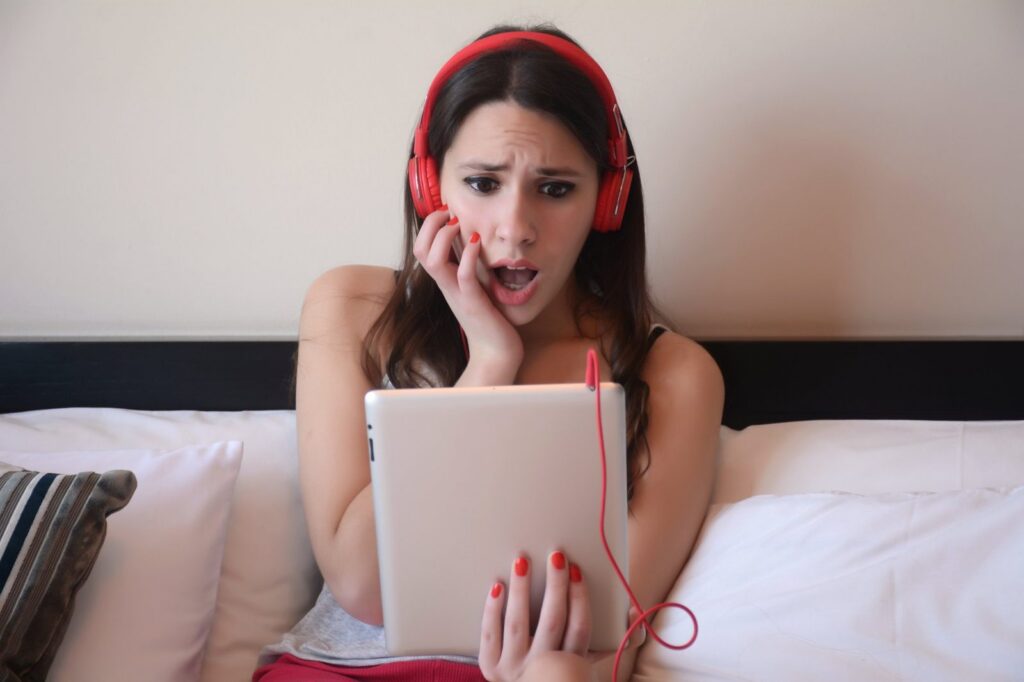
Here’s what most people get wrong about scary sounds: people assume the sound is doing something to them.
What’s happening is closer to the reverse: your body is listening on your behalf, scanning the world for safety, and when certain tones, textures or volumes report that the world is unsafe, you start to perceive an unsafe world.
It’s like virtual reality.
What you’re perceiving may or may not be true; it’s the goggles you’ve put on in that moment that shade how you perceive your reality.
Context decides how the goggles fit your face.
When Blumstein’s team (the same team that found those distress-call edges in horror scores) returned to the question in 2012, adding harsh noise to neutral music made it feel more arousing and more negative.
Pair the same music with calm, ordinary video, and the arousal effect disappeared even though the clips still felt more negative.
The ears file a report; the brain reads it against everything else in the room. It’s the same reason music can change how food tastes, which I explored in Sonic Seasoning.
So, why do people pay to be scared?
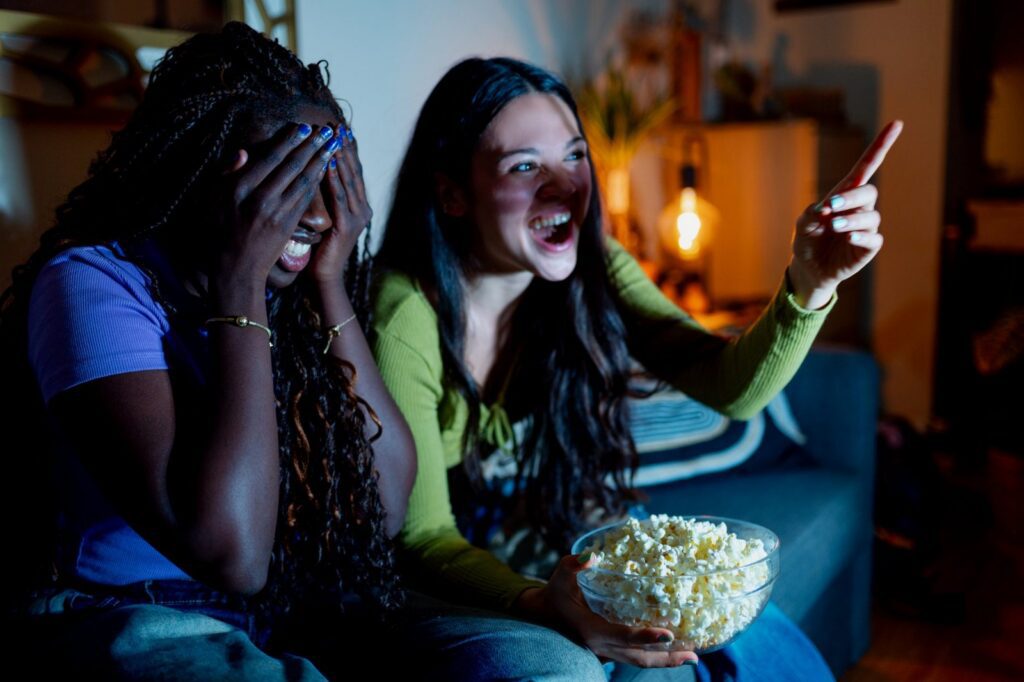
I’ll confess: I don’t share the appetite. People seeking out fear doesn’t make much sense to me, but, well, there you have it.
The research on why people seek fear is surprisingly consistent.
In a 2020 field study at a Danish haunted house, Marc Andersen, Mathias Clasen and colleagues fitted 110 visitors with heart-rate monitors and asked how much fun they were having. Enjoyment peaked in the middle. Too little fear was boring, too much was simply unpleasant, and the fun lived in a sweet spot between. (Like a creepy Goldilocks and her three bears.)
A 2019 study led by sociologist Margee Kerr surveyed 262 visitors to a Pittsburgh haunted attraction, about 80 of them with brain recordings before and after. Most left in a better mood, especially those who arrived stressed or bored, and their brains showed calmer reactions to tasks they undertook later after being in the haunted attraction. The authors call the work exploratory. That’s one way to put it.
Psychologist Paul Rozin has a name for the larger pattern: benign masochism.
In a 2013 set of surveys, his team found people enjoy chili burn, sad films and roller coasters for the same reason.
The body sounds an alarm while the mind knows it’s safe, and the gap between the two feels good. Some people relish fear because it helps them feel alive.
One 2021 survey of 310 adults even found horror fans showed more psychological resilience early in the pandemic, though a survey can’t say whether horror built that resilience or resilient people pick horror.
The thread through all of this research is the frame: safety and control make the difference.
A horror film is threat with a side exit door, a confirmed running time, and a handy pause button. Inside that frame, the alarm becomes a ride, the same way the frame around a sound practice changes what the sound does to us (more on that in Healing Rituals). Defined time. Defined space. Defined motivation.
So, why do people like horror movies? They get to feel the body’s full alarm while holding the safety switch.
The sonic playground of light & dark
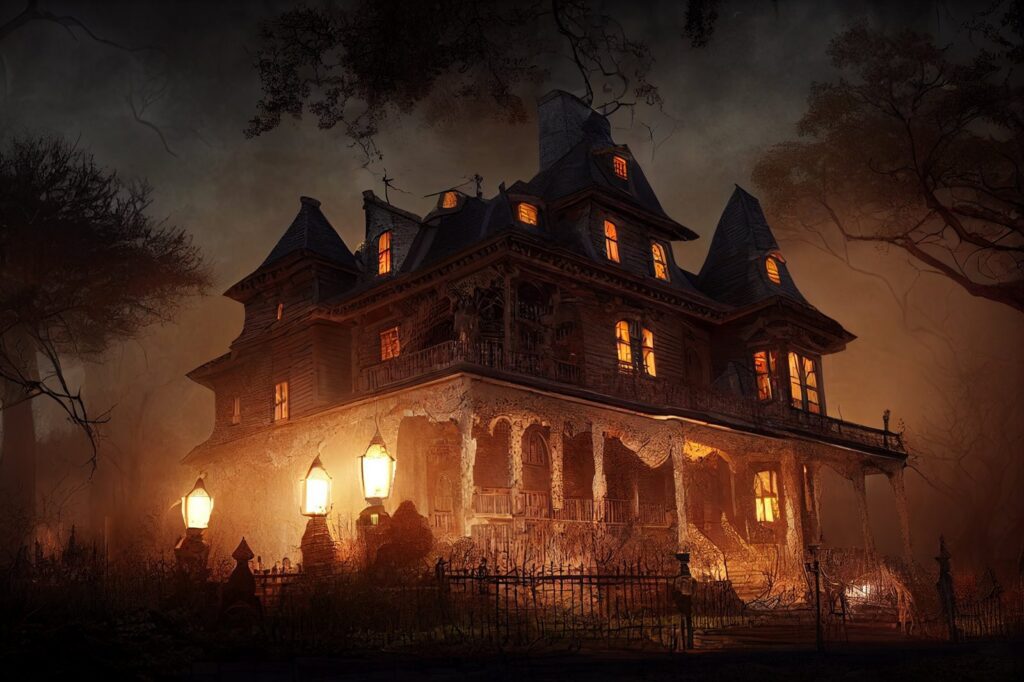
Consider the most iconic masterpiece paintings of history: Da Vinci’s Mona Lisa, van Gogh’s The Starry Night, or Rembrandt’s The Night Watch.
Darkness brings forth light in the painting. Darker tones help more vibrant colors feel even more alive. Light is defined by the presence of the dark, otherwise it’s just, well, bright.
As a musician, I use this same shading power of light (consonance, or pleasing sounds) and dark (dissonance, or disagreeable sounds) on purpose.
Disagreeable tones are just as important in music as agreeable ones: they make the music feel alive.
In fact, dissonance is what leads us towards the feeling of musical resolution. You need the friction in order to find rest. You need sound waves to rub against each other so that they can spread out once again and breathe and sound sonorous and beautiful.
There’s payoff in the friction and payoff in the dissonance.
But it also has to be intelligently used. Discord is not just scored willy-nilly, because when it is, the piece sounds chaotic, unsettling, or just downright unenjoyable. Dissonance requires discernment.
When you bring color into sound, you’re painting a sonic picture. Every picture has shadows because it’s the shadows that bring forth the light and the colors. The shadows create depth and complexity in this visual world that you’re taking in.
Sound is no different.
When sound becomes a weapon
The same power within music has a darker use, and this honest article names it.
Musicologist Suzanne Cusick has documented how “loud music” became a standard, openly acknowledged part of harsh interrogation in US detention camps from 2002 to 2006, used to convince prisoners that resisting was futile. In December 1989, US troops blasted rock music around the clock at the Vatican embassy in Panama, where Manuel Noriega had taken refuge, to pressure him out; the military’s own report called it “a clumsy effort to harass Noriega.” In 2009, Pittsburgh police turned a Long Range Acoustic Device, a military-developed “sound cannon,” on a street during the G-20 summit. A visiting professor, Karen Piper, sued over permanent hearing damage, and the city later paid $72,000 to settle.
(And these are just the stories that make the news headlines or are on record.)
Look at what does the damage in every documented case: volume, repetition, and the removal of any way out.
The harm comes from taking away choice, which is exactly what the haunted house hands back.
Does awareness make the world less scary?
Personally, I think it does, and I want to be precise about why.
In the moment, the first jolt is out of your hands.
Startle fires before thought, and sometimes fear is overwhelming enough that the body locks down and can’t move past it.
Those reactions can be trained, though. A 2014 RAND review for the US Air Force concluded that people can learn to limit fear’s grip on performance through education, skills practice and exposure to realistic stress. It’s what warriors drill for. Even trained, they still get triggered sometimes, and they still freeze; training shifts the odds while the reflex remains.
What comes after the jolt is where awareness gets a vote.
Fear is a condition, and inside it we have an opportunity to choose how we respond.
Not knowing something is there doesn’t make the world less scary, either. Something being scary is our perception of that something. What’s scary to me might not be scary to you, and vice versa, partly because we have different levels of understanding and awareness around that topic.
Don’t get me wrong. Evil and atrocities and terrible things still happen in the world. They’re there. Yet, looking away only means we don’t have to address our own fear.
Being aware of something but unmoved by it is a very different thing. That’s the power: you see it clearly, and you choose that it won’t control you or dictate how you move forward.
Try this: two ways to watch the same scene

Pick a scary moment from a film you’ve already seen, so the plot can’t ambush you. Then watch it twice.
First, with your eyes. Sound on, eyes open: notice how you feel, and where in your body you feel it. Rewind. Sound on, eyes closed: notice what changes. You may find the fear gets louder in the dark.
Then, with your ears. Rewind again. Sound on, eyes open, as before. Rewind once more and mute it, eyes still open. Notice how much of the fear is left.
Afterward, ask yourself one question: which version felt like being acted on, and which felt like choosing to listen?
The choice is yours
Whilst a musician’s role is to guide us through the story of sound, we have to recognize that sound contains both beauty and angst, joy and fear, the divine and the profane. And the choice is how we direct our awareness and choose the sounds that we bring into our body and into our lives.
No two people hear the same song, and no two people hear a horror score the same way either. If you’d like to know what you’re tuned to right now, the Signature Frequency Quiz takes about three minutes and ends with a track composed for your result.
Questions people ask about horror movies and sound
Researchers call it recreational fear. The body sounds an alarm while the mind knows it’s safe, and the gap feels good. In a 2020 haunted-house study of 110 visitors, enjoyment peaked at a middle level of fear: too little was boring, and too much was simply unpleasant.
Screams carry a rapid flutter in loudness that the ear hears as roughness, and listeners rate rougher sounds as more alarming. A 2020 study found that frightening film music copies that same roughness, and a 2010 study found horror soundtracks carry more noisy screams and harsh distortion than expected.
One small study suggests they might. In 2026, 36 people heard music with or without hidden infrasound, sound below the range of human hearing. They couldn’t tell when it was on, yet the infrasound groups reported more irritability, rated the music as sadder and had higher levels of the stress hormone cortisol. It is an early, small finding.
Psychologist Paul Rozin calls it benign masochism: enjoying the body’s alarm in a setting the mind knows is safe, the same pull behind chili burn and roller coasters. A 2019 study of 262 visitors to a Pittsburgh haunted attraction found most left in a better mood, especially those who arrived stressed or bored.
Studies cited
- Arnal et al., 2015. Screams carry a fast loudness flutter (roughness) that listeners rate as alarming; alarms share it. Current Biology
- Blumstein, Davitian & Kaye, 2010. Horror soundtracks held more noisy screams and non-musical distortion than expected. Biology Letters
- Blumstein, Bryant & Kaye, 2012. Harsh noise made music feel more arousing and negative; video removed the arousal effect. Biology Letters
- Trevor, Arnal & Frühholz, 2020. Scream-like film music imitates the roughness of human screams. Journal of the Acoustical Society of America
- Scatterty et al., 2026. 36 people; hidden infrasound went undetected but raised irritability, sadder ratings and cortisol. Frontiers in Behavioral Neuroscience
- Andersen et al., 2020. 110 haunted-house visitors with heart-rate monitors; enjoyment peaked at middling fear. Psychological Science
- Kerr, Siegle & Orsini, 2019. 262 haunted-attraction visitors, about 80 with brain recordings; most left in a better mood. Emotion
- Rozin et al., 2013. Benign masochism: people enjoy initially aversive experiences when they feel safe. Judgment and Decision Making
- Scrivner et al., 2021. Survey of 310 adults: horror fans showed more resilience early in the pandemic. Personality and Individual Differences
- Cusick, 2008. “Loud music” as a standard part of harsh interrogation in US detention camps, 2002 to 2006. Journal of the Society for American Music
- Talijan, 2022. The barely audible sub-bass of Gaspar Noé’s Irréversible. Edinburgh University Press
- Robson & Manacapilli, 2014. People can be trained to limit stress’s effect on performance. RAND Corporation
- Rock music at the Vatican embassy in Panama, 1989, from the military report held by the National Security Archive. NBC News
- The 2009 LRAD use at the Pittsburgh G-20 and the Piper settlement. ACLU of Pennsylvania
- How Toccata and Fugue in D minor became a horror staple after Dr. Jekyll and Mr. Hyde (1931). WFMT
Charleene Closshey
Charleene Closshey is a conservatory-trained musician, Billboard Top 40 artist and composer, and a PhD candidate in natural medicine. For four decades she studied what sound can do on a stage; now she measures what her compositions do inside the body: heart rate variability, sleep and brainwaves. She has performed on Broadway in the Tony Award–winning Once, starred in feature films, spoken at TEDx, and composed for film and stage. With one foot in the lab and one foot in the recording studio, she reads the research the way a musician listens: closely, and for what’s actually there.
About Charleene →
What does sound do inside a body?
Sound as wellness, with the research behind it. New articles in your inbox as they publish.