

Sleep MeditationsSound baths for sleep
Live sound baths for sleep and deep rest with crystal singing bowls tuned to 432 Hz. Drift through yoga nidra, set down the day, and let the dreaming dream you.
“Rest is such an underrated gift we can give ourselves.”
Rest is an underrated skill imperative for a healthy, vital life. Often, we forget the importance of rest. These sessions put rest first.
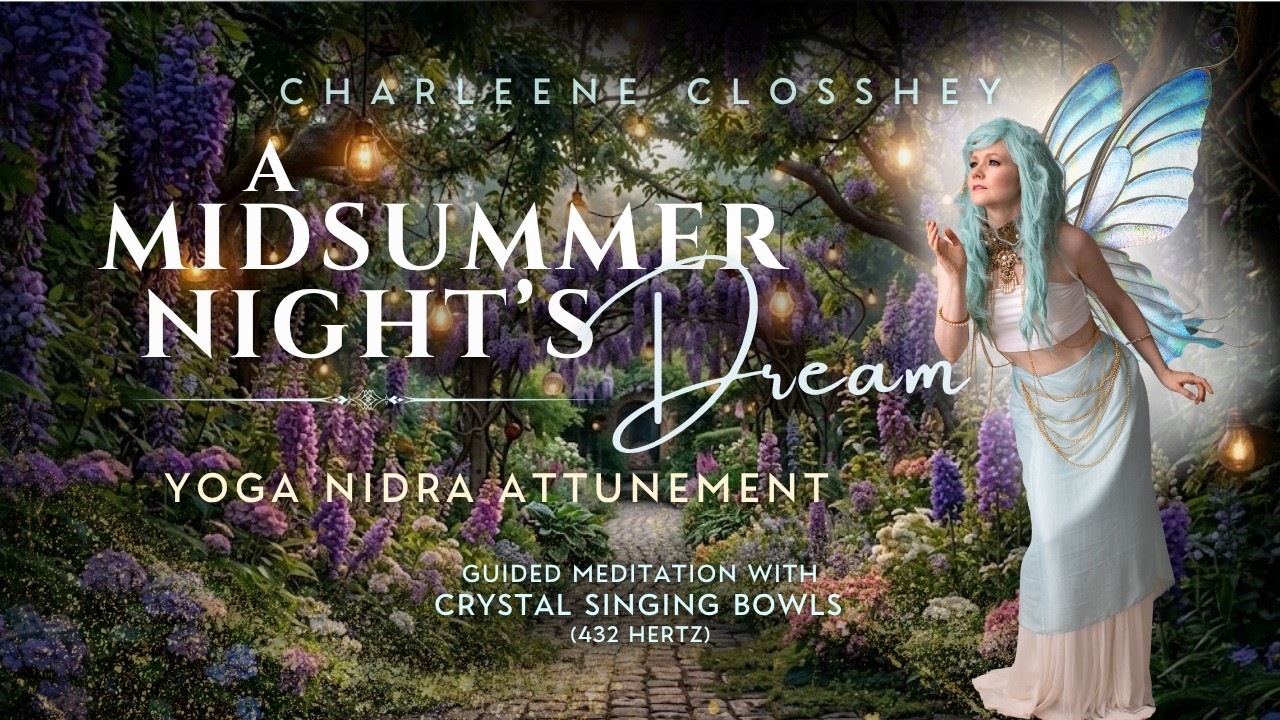
Begin with A Midsummer Night’s Dream, a yoga nidra journey from the evening of the 2026 summer solstice weekend. Yoga nidra means yogic sleep, where the body rests deeply while awareness hovers at the doorway between waking and sleeping. Follow a firefly of light from the crown of your head to the soles of your feet. Find the reflection of your own face in the shimmering throat of a violet iris flower. Lean against an old tree, float into a warm and bottomless dark, and let the dreaming dream you.
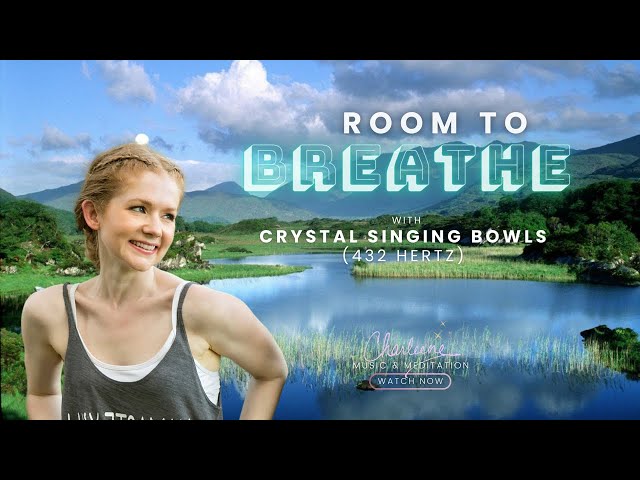
Other sessions help you bring a peaceful pause to the end of your day. Merge with a wise old tree in an amber forest and let the wind lift every leaf you’ve been carrying. Bookmark the weekend before the week begins. Trace a slow figure eight of golden light across the mind until both halves settle. Give yourself room to breathe.
Several of these sessions close with a choice: drift into sleep, or come back into your day. Choose sleep whenever you need it. Falling asleep counts as one more way of letting go.
Lie down, dim the lights, and turn the volume to a whisper. If you wake as the bowls fade, rest a little longer before you move. (Personally, I love gently waking in the early morning hours to lay and listen to the owls outside my window. My husband Jeremy really prefers his sleep. We’re all different. You do you.)
The Sessions
Sound baths for sleep and rest
 2:14:39


About sound baths for sleep
Can I fall asleep during a sound bath?
Yes, and Charleene encourages it. Several sessions close with an option written for sleep, and she treats drifting off as one more way of letting go.
How does sound help sleep? What does the research say?
Research on music and sleep is encouraging, and research on singing bowls is still young. The strongest evidence is a 2022 Cochrane review of 13 trials with 1,007 adults with insomnia symptoms (Jespersen et al.): people who listened to music at bedtime for several weeks rated their sleep quality better, by about 2.8 points on a 21-point scale, with moderate-certainty evidence and no reported side effects. Sound can reach sleep itself, too. In a 2017 Northwestern University study of 13 adults aged 60 to 84 (Papalambros et al., Frontiers in Human Neuroscience), soft pulses of pink noise timed to the slow waves of deep sleep strengthened that deep-sleep activity, and next-morning word recall improved about 27%, compared with about 6% after a quiet night. That was precisely timed laboratory sound, not a sound bath. For singing bowls, a 2025 review of 19 studies (Cai et al., Integrative Medicine Research) found less anxiety and better mood in several small trials, mixed results for sleep, and a clear call for better research. In a 2025 University of Waikato study, 62 young adults who listened to quartz crystal singing bowl music over eight weeks reported better sleep quality, as did a comparison group practicing progressive muscle relaxation.
How much sleep do I need?
For most adults, 7 or more hours a night, on a regular basis. That is the joint recommendation of the American Academy of Sleep Medicine and the Sleep Research Society (Watson et al., Journal of Clinical Sleep Medicine, 2015), which links regularly sleeping less than 7 hours to poorer health, mood and performance. The National Sleep Foundation's ranges by age (Hirshkowitz et al., Sleep Health, 2015): children 6 to 13, 9 to 11 hours; teenagers 14 to 17, 8 to 10 hours; adults 18 to 64, 7 to 9 hours; adults 65 and older, 7 to 8 hours. Some people need more: the AASM notes that more than 9 hours may suit young adults, people catching up on lost sleep and people who are ill, and genes play a part. Regular timing and good quality count alongside the total. If you sleep enough hours and still wake unrefreshed, talk with a doctor or a sleep specialist.
What is yoga nidra?
"Yogic sleep": a guided practice in which the body rests deeply while awareness stays gently awake at the edge of sleep. A Midsummer Night's Dream (2026) is a full yoga nidra journey with the bowls.
Should I use headphones for sleep?
Use whatever helps you rest. Headphones carry the low bowls more fully; a speaker at low volume is gentler if you share a bed or turn a lot in your sleep.
Which session should I start with?
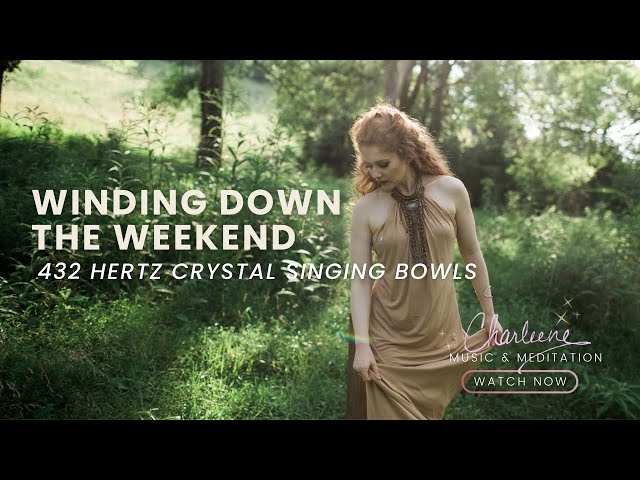
For a full journey into sleep, start with A Midsummer Night's Dream (2026). To set down a heavy day, choose The Art of Letting Go (2025). For a short wind-down, try Winding Down the Weekend (2022), about 35 minutes.
Is this a treatment for insomnia?
No. These are relaxation and meditation sessions. If trouble sleeping persists, please talk with a doctor or a sleep specialist.



The live schedule, in your calendar
Subscribe once, and every live session lands in your calendar, adjusted to your time zone. Or, opt to get a quick reminder email before each live. Never miss a beat.